Showing posts with label SOCIAL. Show all posts

Wednesday, 5 August 2015

Today 101st Anniversary of the First Electric Traffic Signal System

  Today 101st Anniversary of the First Electric Traffic Signal System 

The world’s first electric traffic signal is put into place on the corner of Euclid Avenue and East 105th Street in Cleveland, Ohio, on this day in 1914.
In the earliest days of the automobile, navigating America’s roads was a chaotic experience, with pedestrians, bicycles, horses and streetcars all competing with motor vehicles for right of way. The problem was alleviated somewhat with the gradual disappearance of horse-drawn carriages, but even before World War I it had become clear that a system of regulations was necessary to keep traffic moving and reduce the number of accidents on the roads. As Christopher Finch writes in his “Highways to Heaven: The AUTO Biography of America” (1992), the first traffic island was put into use in San Francisco, California in 1907; left-hand drive became standard in American cars in 1908; the first center painted dividing line appeared in 1911, in Michigan; and the first “No Left Turn” sign would debut in Buffalo, New York, in 1916.
Various competing claims exist as to who was responsible for the world’s first traffic signal. A device installed in London in 1868 featured two semaphore arms that extended horizontally to signal “stop” and at a 45-degree angle to signal “caution.” In 1912, a Salt Lake City, Utah, police officer named Lester Wire mounted a handmade wooden box with colored red and green lights on a pole, with the wires attached to overhead trolley and light wires. Most prominently, the inventor Garrett Morgan has been given credit for having invented the traffic signal based on his T-shaped design, patented in 1923 and later reportedly sold to General Electric.
Despite Morgan’s greater visibility, the system installed in Cleveland on August 5, 1914, is widely regarded as the first electric traffic signal. Based on a design by James Hoge, who received U.S. patent 1,251,666 for his “Municipal Traffic Control System” in 1918, it consisted of four pairs of red and green lights that served as stop-go indicators, each mounted on a corner post. Wired to a manually operated switch inside a control booth, the system was configured so that conflicting signals were impossible. According to an article in The Motorist, published by the Cleveland Automobile Club in August 1914: “This system is, perhaps, destined to revolutionize the handling of traffic in congested city streets and should be seriously considered by traffic committees for general adoption.”

Tuesday, 28 July 2015

 End of an era

       President Abdul Kalam dies in Shillong


Shillong: former president apj abdul kalam,the 'missile man' who came to be known as 'people's president' died on monday after he collapsed during a lecture at the IIM in shillong on monday evening

                                          kalam who woul have turned 84 in october,was confirmed dead more than two hours after he was heeled in to the ICU of Bethany hospital in a critical condition following the collapse at around  6.30 pm.

                                       According to reports,kalam suffered a massive cardiac arrest during the lecture at IIM,Shillong.

                                     Considered the most popular president,kalam became the 11th head of the state and occupied the post between 2002 and 2007 but lack of consensus denied a second term in office for a man who came from out side political spectrum.


                                   Meghalaya Governor V Shanmughanathan,eho rushed to the hospital on hearing the news of his admission,said kalam died at 7.45 pm.despite medical team best efforts,he could not be revived.


chief secretary PBO warjiri told reporters  out side the hospital that he had spoken to Union Home Secretary LC Goyal asking for necessary arrangements  to be made for carrying kalam's body from Guwahathi to Delhi on tuesday morning.

"The former president has been admitted to Bethany hospital in a critical condition ,"M.Kharkrang,sp.Khasi Hills said earlier.

Doctors from the army hospital and North Eastern Indira Gandhi Regional Institute of Health and Medical Sciences(NEIGRIHMS) rushed to Bethany hospital but their efforts proved to be of no avail.

 A seven-day national mourning will be declared by the Centre, Union Home Secretary LC Goyal said. Both the Houses of Parliament are likely to make obituary references and adjourn as a mark of respect to his memory.
Avul Pakir Jainulabdeen Abdul Kalam rose from humble origins to become the President in the most unexpected manner during the NDA government under Atal Bihari Vajpayee after an all party consensus minus the left parties that saw him through in an election which he won handsomely.

An aeronautics engineer from Madras Institute of Technology, Kalam was considered the brain of missile programme in India got and as Chief Scientific Adviser to Vajpayee was also instrumental in the Pokhran nuclear test in 1998.
As President, Kalam utilised any opportunity that came to him to address students, especially school children, to dream big so that they became achievers in life. A bachelor, the former President was a veena player and was deeply interested in Carnatic music.
He was vegetarian all his life.
Earlier during the day, Kalam had tweeted about his function at IIM Shillong.
He is inspiration for many young stars.Now he is not with us but his thoughts and memories will live ever in our hearts.

Saturday, 16 May 2015

The Webcam Pulse Detector Shows Your Life Signs Using Your PC's Camera


Windows/OS X: Your computer's webcam can be useful for more than just quick photos and video calls. The Webcam Pulse Detector is a fun, open source application originally designed at NASA to use your connected camera to take your heart rate. Now you can try it out at home.
                                                        The utility is simple to use. Just grab the executable and run it. It's a self-contained python application, so it shouldn't need any dependencies or other files to work. Once you open it, you'll get a view of your camera, and it'll ask you to guide your face into view so it can get a fix on your face and your forehead. Once it's in the right position, press S to lock your face, and watch the app take its readings. You'll even get a little graph (if you press D) that shows your heart rate over the time you've had the app open.
                                                     To be fair, it's not perfect at all. My readings tended to be particularly low (maybe it has more difficulty with people of darker complexion) but for others it seemed to work pretty well. The Webcam Pulse Detector is available for OS X and Windows in pre-compiled binaries, and a version for Linux is on the way soon. You can check out the project homepage (and download it to try yourself) below.

Tuesday, 12 May 2015

Nepal earthquake, magnitude 7.3, strikes near Everest

Nepal earthquake, magnitude 7.3, strikes near Everest

  • 28 minutes ago
  •  
  • From the sectionAsia
Nepalese run for open space as a strong earthquake hits Kathmandu, Nepal, 12 May 2015.
When the earthquake struck, people in Kathmandu ran out on to the streets
A major earthquake has struck eastern Nepal, near Mount Everest, two weeks after more than 8,000 died in a devastating quake.
At least 29 people have been killed and 1,006 injured, according to the Nepali government.
The latest earthquake hit near the town of Namche Bazaar, near Mount Everest.
The US Geological Survey said it had a magnitude of 7.3. An earthquake on 25 April, centred in western Nepal, had a magnitude of 7.8.
The latest tremor was also felt in northern India and Bangladesh, and was centred east of the Nepalese capital Kathmandu, in a rural area close to the Chinese border.
Follow the latest developments on our live page
In Kathmandu, which was badly damaged last month, people rushed out of buildings as the quake struck at 12:35 local time (06:50 GMT).
Rescue helicopters have been sent to districts north-east of the capital, that are believed to be worst hit.
A spokesman for Nepal's government told the BBC that 31 of the country's 75 districts had been affected.
line

At the scene: Simon Cox, BBC, Kathmandu

You could feel it really strongly. It went on for about 25 seconds - the ground was shaking, the birds started squawking, you could feel the buildings shaking.
There was another aftershock and people were all out on the street. That aftershock really added anxiety and panic. People started crying.
They are calm but you can tell they are all scared.
line
The BBC's Yogita Limaye, who was in Nepal's mountains when the latest earthquake struck, said: "The earth shook and it shook for a pretty long time.
"I can completely understand the sense of panic. We have been seeing tremors: it's been two-and-a-half weeks since the first quake. But this one really felt like it went on for a really long time. People have been terrified."
Nepalese run for open space as a strong earthquake hits Kathmandu, Nepal, 12 May 2015.
The quake was followed by another strong aftershock, measuring 6.3
Earthmovers remove debris from a building that collapsed in an earthquake in Kathmandu, Nepal, Tuesday, May 12, 2015.
The earthquake caused some buildings to collapse in the centre of Kathmandu
At least four people were killed in the town of Chautara, east of Kathmandu, where a number of buildings are reported to have collapsed.
The International Organisation for Migration said bodies were being pulled from rubble there.
Krishna Gyawali, the chief district officer for Chautara, said there had been a number of landslides.
map showing quake epicentre - Namche Bazar - 12 May 2015
The quake struck at a depth of 15km (9.3 miles), according to the US Geological Survey - the same depth as the April 25 quake. Shallow earthquakes are more likely to cause more damage at the surface.
Tuesday's earthquake is likely to be one of the largest to hit Nepal, which has suffered hundreds of aftershocks since 25 April.
The 7.3 quake was followed by six aftershocks of magnitude 5.0 or higher.
One tremor that hit 30 minutes later, centred on the district of Ramechhap, east of Kathmandu, had a magnitude of 6.3.Jump media player
Out of media player. Press enter to return or tab to continMedia 
lineAnalysis: Jonathan Amos, science correspondent, BBC News
Scientists are already producing some preliminary analyses of Tuesday's quake.
The epicentre this time is about 80km (50 miles) east-north-east of Kathmandu, halfway to Everest. On 25 April, the big quake began 80km to the north-west of the capital.
In April, we saw the fault boundary rupture eastwards for 150km (93 miles). And the immediate assessment suggests Tuesday's tremor has occurred right at the eastern edge of this failure.
In that context, this second earthquake was almost certainly triggered by the stress changes caused by the first one. Indeed, the US Geological Survey had a forecast for an aftershock in this general area.
Its modelling suggested there was 1-in-200 chance of a M7-7.8 event occurring this week. So, not highly probable, but certainly possible.
Quake experts often talk about "seismic gaps", which refer to segments of faults that are, to some extent, overdue a quake. Tuesday's big tremor may well have filled a hole between what we saw on 25 April and some historic events - such as those in 1934, that occurred further still to the east.

Sunday, 10 May 2015

MyFitnessPal Adds Premium Version with More Diet Detail, Custom Goals

MyFitnessPal Adds Premium Version with More Diet Detail, Custom Goals

MyFitnessPal Adds Premium Version with More Diet Detail, Custom Goals

MyFitnessPal, our favorite fitness and nutrition tracking tool, has always been free, but the service just added a new premium account tier with more discrete options for your goals, more ways to keep track of the macronutrients in the foods you eat, diet and meal suggestions, and of course, no ads.


MyFitnessPal will still be free, and free users won’t notice a difference now that there’s a premium version kicking around (aside from being prompted to upgrade—Update: An MFP rep reached out to say free users are getting two new features: foods with “verified” nutrition and calorie information, and better graphs), but the premium version lets you, for example, track your protein intake, carbohydrates, or fat intake over the past several days or weeks, which is useful if you’re trying to hit a certain level. You can even “quick add” by macros, so if you need 20 grams of protein, you can say that and the app will show you what to eat to get it without breaking your other goals. 
The premium version will also suggest foods to help you get to your macro goals, so if you’re trying to slowly cut back on sodium, you can use MyFitnessPal to see how the foods you eat rank when it comes to sodium. This makes it easy to see your worst offenders, and what you may be able to cut out of your diet (or better yet, replace.) Premium users will also be able to set their macro and calorie goals on a day by day basis, so if you have different numbers for a workout day versus a rest day, or have a “free day” in your diet, you can account for it all easily.
All of those features come at a price though—premium accounts cost $10/month or $50/year, and your membership will unlock additional features in upcoming version of the iOS and Android apps. You can sign up now, though, and read more at the link below.
Upgrade to Premium | MyFitnessPal via The Verge

Monday, 10 November 2014

Stop Wasting So Much Time Analyzing Your Efficiency

Stop Wasting So Much Time Analyzing Your Efficiency


Oftentimes, we spend an inordinate amount of time of trying to make things more efficient. This is great, but XKCD reminds us that it's often a futile effort. 

It's an age old cost-benefit problem, but it's always nice to get a reminder to check your methods. If you're spending more time thinking about a problem or trying to make it more efficient than it takes to actually complete the project, then you're doing something wrong.

Thursday, 6 November 2014

SUPER SPORTS MAN AB de Villiers AB's Favourite Book: The Bible

SUPER SPORTS MAN AB de Villiers

» Biography

THE BASICS
  • Full Name: Abraham Benjamin de Villiers (prefers to be called AB)
  • Nickname: Abbas
  • Date of Birth: 17 February, 1984
  • Star Sign: Aquarius
  • Place of Birth: Warmbaths/Warmbad (now renamed Bela Bela), Transvaal Province
  • Currently Resides: Pretoria, Gauteng Province
  • Height: 178cm (5’10″)
  • Family: Parents – Millie & Abraham Benjamin; and brothers – Jan & Wessels (9 years & 6 years older respectively)
  • Marital status: Married to Danielle Swart (March 30, 2013)
  • Schools Attended: AB went to primary school in Warmbaths, and then became a boarder at Afrikaans Hoër Seunskool.
  • Occupation: South African cricketer and part-time musician (AB writes songs, plays the guitar and released an album with Ampie du Preez called, “Maak Jou Drome Waar” in August 2010.)
AB’s FAVOURITES
  • Cricket Ground: SuperSport Park, Centurion (his home ground)
  • Form of Cricket: Test Matches
  • Food Indulgences: Pasta and seafood
  • Drink: Passionfruit and soda
  • Restaurant: Crawdaddy’s, Menlyn Park
  • Sportsmen: Tiger Woods & Roger Federer
  • Rugby Teams: Blue Bulls & Springboks
  • Soccer Team:  Manchester United
  • School Subject: Biology
  • Movies: “Gladiator” & “A River Runs Through It”
  • Song: “Needs” by Collective Soul, & “All That I Have” by Snow Patrol
  • Band: Snow Patrol
  • Book: The Bible
  • Actress: Kate Beckinsale
  • Number: 17
MISCELLANEOUS
  • Alternative career: “I would probably be a doctor like my dad, but I’ve never had the chance to study”.
  • First job: carrying the drinks in the backyard while his brothers played cricket. AB was 4 years old and his reward at the end of the day was the chance to bat.
  • Who he’d invite to dinner: Nelson Mandela, Tiger Woods, Roger Federer & Kate Beckinsale. AB has also mentioned he’d invite Brad Pitt (and maybe Angelina, too).
  • Scared of: snakes


EARLY LIFE
Baby AB with his father.Abraham Benjamin de Villiers (more commonly known by his initials, AB) was born on February 17, 1984 in Pretoria, Transvaal Province, South Africa. He is the youngest of three sons born to parents Millie and Abraham Benjamin (who AB is named after) – his older siblings being Jan (9 years older) and Wessels (6 years older). His mother works in property, while his father is a doctor with a general practice. AB was raised in the small town of Warmbad, in the north of the country, where he attended primary school. It was here that AB learned to play cricket in the backyard with his brothers.
“When I was very young, I started playing cricket in the garden against my older brothers, Jan and Wessels, and Martin van Jaarsveld [who later played for the Titans and South Africa],” AB remembers. “I had to carry the water and, after a long day, they would finally give me my chance. I was a little ou and they were all in matric. They would try to intimidate me. The bat was actually too heavy for me, and I would rest it on the dustbin while they were walking back to their mark,” he says. “They battled to get me out and they would get so frustrated that they’d bowl a couple of beamers at me to see what I would do. Saturday games at our house in Bela Bela were very competitive. My brothers were merciless. They were monsters. There were always a lot of tears—usually mine,” he laughs.
AB playing cricket as a child.“I decided when I was 10 that I was going to do something in sport one day,” he said. “I realised then that that was my way to go. My mum and dad are good at sports and I’ve got two older brothers who drilled into me how to play. I’m six years younger they made it clear that if I wanted to be involved I was going to get it, so every single game was unbelievably competitive. We’re very competitive, my mum most of all, and when we get on to a tennis court or golf course the family stops. That’s how I grew up, every single day of my life I was playing something, and from about 16 it was cricket. It’s part of the Afrikaans culture, playing it hard and doing your best. But it’s very important to stay humble, that was a very big part of my growing up, not getting big-headed.”
AB went to Afrikaans Hoër Seunsskool in Pretoria, across the road from Loftus Versfeld, where Jacques Rudolph was also a student.
AB is one of those boys who most of us knew at school and both resented and wanted to be. He plays golf off a handicap of two, not having had time to maintain his scratch rating, gave up tennis at the age of 13 when he was in the national squad and did not want to leave home to attend the Nick Bollettieri Academy in Florida, and had an offer to play at fly-half for the Blue Bulls (provincial rugby team). Actually, maybe he was better than the average bloke you knew at school.
If things have come easy to AB, he has inherited his culture’s work ethic. Church and sport are twin religions. “Sundays in church, and whenever I’ve got time off church, cricket and golf.”

MAKING HIS DREAMS COME TRUE

“I was eight years old when I saw Jonty’s world famous run out against Australia in the 1992 World Cup. It really made an impression on me. I remember thinking: this is a cool game! I started dreaming of following in Jonty’s footsteps,” he says. Recognising their son’s cricketing aptitude, AB’s parents decided to send their talented son to Affies. “At that stage I participated in various sports and wasn’t sure what I wanted to focus on. However, when I made the South African Colt team at 16, I realised cricket was something I could pursue professionally. I started working harder. I wanted to be the best in my age group.”
While playing for the South African Schools Eleven, he was spotted by the Titans’ coach Dave Nosworthy. Dave gave him a chance to play for this team against Canada in a 2003 World Cup warm-up game. “It was the first time that I played a televised game. I was very nervous, but I thrive under pressure, especially if people are watching. Life is all about grabbing opportunities. I grabbed the opportunity with both hands,” he says.
He was a star of the South African Under-19 team in England in 2003, and then played for the Carrickfergus Cricket Club in Northern Ireland in 2004. AB says this was a big step in his life as it was the first time he lived away from home. He had to learn to become independent and self-sufficient.
Practising in the nets in his first tour of Australia in 2005/06Soon after, AB played for the Northern Titans before being selected to play Test cricket at the tender age of 20 years old. “I love Test cricket,” AB said. “I love the intensity and the pressure, and when I was batting at Durban I couldn’t hear the crowd. When you move from the provincial side into the national side you’ve got doubts, but if the doubts get to you you’ll struggle.”
“Making cricket my career and playing for the national squad are dreams come true. We have been in a learning phase for the past few years—and it has paid off. It’s all about consistency. In the past we may have been guilty of not playing a consistent game. But we have returned to the basics, we know and understand each other and we have worked consistently towards the same goals. We have also stuck to the same ‘brave’ brand of cricket.
[Read more about AB's cricket career here.]

THE FUTURE

“Personally, I have grown as a player in the past two years. I have found my feet on the field. Performing consistently has also been a personal highlight for me and it remains my number one goal,” says AB. However, he emphasises that his life isn’t just focused on cricket. Off the field, AB loves spending time with his family and friends. He also plays golf (off a five handicap), tennis and the guitar.
Show Them Who You Are CD cover.AB and a friend, Ampie du Preez released the motivational song ‘Show Them Who You Are’ at the end of last year. This song became the anthem of the Proteas’ rise to victory against Australia. By early 2010, AB and Ampie are hoping to release their first CD. “It has always been my dream to make and record music. And we’re not merely dabbling in it—we’ve decided that our CD can’t be anything but great,” says AB who also took piano lessons and sang in the school choir in primary school.
[Read more about AB's music here.]
In addition, he is a partner in his brothers’ fast food businesses. They will soon start a catering business together. This move is part of his long-term after-cricket strategy. When asked in an interview with SA SportsIllustrated in mid-2009, whether he could see himself playing until he was 40, AB replied, “No. Not to 40. There is no chance. I think there is more to life than just playing cricket for 25 years. I will definitely find the right time to retire. When I start my family I am definitely going to retire. I am not going to wait till I am 40.”
AB is also passionate about his involvement in Francois Pienaar’s Make a Difference Foundation. This organization gives underprivileged children the opportunity to attend the country’s best schools, so he mentors one particular youngster at school in Johannesburg and he donates 100% of his fee for giving weekly radio interviews to M.A.D. He has even arranged to print, at his own cost, postcards with a photograph and space for him to sign, that he can carry in his cricket bag and hand out to the youngsters who stand and wait, craving his autograph. “I am a devout Christian and would like to pursue a goal in this regard one day. I’d like start an initiative through which I can touch people’s lives and make the world a better place in whatever way I can.
At this stage, it is still just a dream, but I see it as the measure of true success. I can’t just live for myself.” When talking to AB you get the feeling that it is only a matter of time before this dream also becomes a reality. Realising goals is all about self belief and hard work, he says. “Success is 99% self belief. You have to be confident in your abilities. And hard work comes naturally if you have a passion for something.”

Wednesday, 5 November 2014

Move Before You're Ready: Get Started Without Being an "Expert"

Move Before You're Ready: Get Started Without Being an "Expert"

All our lives, people have told us to learn everything about something before trying it in the "real world". Yet this fast paced world demands that we move before we know everything about a subject. Instead of waiting to change your career, for the perfect internship, or enrolling in more school, you should tweak your education so that you learn and apply skills quickly.
Many people spend their whole lives waiting to be ready. For us, ready often becomes moreof an excuse than a prerequisite.
For example, you don't need a certificate to tell you that you're a design pro. Karen X. Cheng learned design in six months while working full-time. She made it work by moving before she thought she was "ready," and so can you.

Focus on Just-In-Time Learning, Not Just-In-Case Learning

There are two types of learning: you perform "just-in-time" learning when you acquire information just before it is needed (e.g., on-the-job training). In contrast, you perform "just-in-case" learning when you acquire information far in advance of when you need it (e.g., traditional schooling). We only use a small portion of the just-in-case knowledge we acquire in school for our day-to-day work. This type of just-in-case learning is not very effective.
You'll quickly see the importance of just-in-time learning and be forced to apply it to the real world. Or, you'll fail, and learn the hard way. Entrepreneur and angel investor Dan Martell writes on his blog:
Focus on learning and getting the right advice in near-real time. Trying to anticipate the skills and information you will need to acquire months before you actually need it can result in a lot of wasted time.
You'll still need a bit of just-in-case learning, though. Specifically, you'll need to understand the tools or techniques necessary to achieve certain results. As math professor John Cook explains in an earlier article on All in on one site:
On the other hand, you need to know what's available, even if you're only going to learn the details just in time. You can't say "I need to learn about version control system now" if you don't even know what version control is. You need to have a survey knowledge of technology just in case. You can learn APIs just in time. But there's a big gray area in between where it's hard to know what is worthwhile to learn and when.
The key to balancing just-in-case and just-in-time learning is ruthless prioritization and quick deadlines.

Figure Out Your Minimum Effective Dose

A chinese scholar understands over 20,000 Chinese characters, but you only need to understand 1,000 to be literate. The most frequently used 200 characters will allow you to understand 40% of basic literature (enough to read signs, restaurant menus, and basic newspapers).
This is what author Tim Ferriss calls the "Minimum Effective Dose," or MED. It's the smallest dose that will produce a desired outcome. For example, approximately 1,000 words will make you conversational in a language. This concept applies to all sorts of desired outcomes.
Another example: if you've decided to be a blogger, you just need to know how to set up a blog on a platform like WordPress, create a post, and publish it. You can learn how to change the theme, how to gain attention, SEO, and all those other skills later.

Prioritize Depth Over Breadth

You will be tempted to dabble in everything. Don't. Stay focused on the minimum effective dose for a specific outcome before you explore other options. Get really good at one thing before moving on to other skills. As author Josh Waitzkin explains in The Art of Learning:
It would be absurd to try to teach a new figure skater the principle of relaxation on the ice by launching straight into triple axels. She should begin with the fundamentals of gliding along the ice, turning, and skating backwards with deepening relaxation. Then, step by step, more and more complicated maneuvers can be absorbed, while she maintains the sense of ease that was initially experienced within the simplest skill set.
But don't get ahead of yourself. Stay focused on the immediate desired outcome and the skills required to achieve it.

Connect with Others to Accelerate Learning

People who have achieved your goals can be catalysts to your learning. You can save time and learn from their mistakes. You can take a deeper dive into what they do, and understand the habits and skills that were key to their success. Author Robert Green writes in Mastery:
The people in your field, in your immediate circle, are like worlds unto themselves - their stories and viewpoints will naturally expand your horizons and build up your social skills. Mingle with as many different types of people as possible. Those circles will slowly widen.
Logistically speaking, it's possible to connect with anyone these days. (If you want to find an email address quickly, try previously mentioned Norbert.) Naturally, the other person has to want to help. If they do, creating a relationship with them can be valuable to your growth.
If you choose someone who isn't busy (e.g., retirees), they're more likely to reply. On the other hand, if you're trying to connect with someone who's busy in the field right now, you could learn about their skills and techniques through one of their close associates. In both cases, you should bring some value to the table. Tim Ferriss elaborates in The 4 Hour Body:
"Do me a favor" is not a compelling pitch. The proposed interview should somehow benefit your contact.
The path of least resistance is to freelance write for a blog, newsletter, or local newspaper and do a piece on this person and his/her methods, or to quote him/her on a related topic as an expert ("Expert Predictions for Winter Olympics," for instance). Once you're in the door, ask your expert all the questions you'd like. Are you terrible at writing? No problem. Make it a Q&A format and simply print the relevant questions and answers.
Once you've connected with them and set up a conversation or interview, your challenge will be to make a good first impression. If it's just over email, you should ask pointed questions that are easy to answer. Do research before you get in touch with them (e.g., reading interviews or listening to podcasts they've participated in) so you don't ask them about something you should've known. Nothing rubs people the wrong way like lazy questions.
At a previous job, my editor gave me a crucial piece of advice that improved my knowledge acquisition: he recommended that I ask, "How?", or "Can you give an example of that?" much more frequently during interviews. He said that he did this at least a dozen times in an interview. These real-world, or even hypothetical, examples help us learn much more quickly and remember things more effectively. (Thanks Sean!)
If you develop your relationships carefully enough, you'll find that some of these people can become your mentors.

Explore a Real-Life Example

A little less than a year ago, I saw something that I really wanted to make: the Pharrell article in Complex Magazine. The interactive elements completely caught my eye and regularly renewed my attention. What if readers could interact with my articles like that? I could tell stories in a much more immersive way.
At the time, I knew absolutely nothing about coding, and had little experience with web design. I was looking into the mother of all interactive articles, Snow Fall, and discovered the term "Parallax" (basically, when one layer scrolls at a different rate than another one).
I knew I didn't have to become great at front end web design or graphic design (depth over breadth), I just needed to make those pages with parallax and scrolling effects really well. I already knew how to write case studies and stories, so I prioritized my search for discovering the minimum effective dosage of coding. I had no idea what that specifically looked like.
I talked to my friend, a software developer, and he told me about a library called Skrollr. Up until this point, I hadn't even thought of building on top of a library or framework. That saved me no less than a dozen hours in research. I can't emphasize the power of connecting with others to accelerate learning enough. (Thanks Jon!)
Building on that just-in-case information, I could search around for "Skrollr parallax tutorials". There was one with a template, so I downloaded it and started tinkering with it (just-in-time learning). Another friend showed me Anvil, and I started messing around with the elements of that template locally. (Thanks Dami!) Eventually, I built a webpage for one of my favorite musicians. I uploaded it to my own website and shared the URL with him via email. He liked the design and we tweaked it to match his branding. He then published it on his website. (Sadly, we had to remove the Parallax element from it because Skrollr didn't play friendly with mobile at the time.) But I got a chance to work with a really interesting person and learn about web design, the entertainment industry, and public relations.

Skip the Artificial Prerequisite

Remember, dramatic change isn't a prerequisite for picking up a new skill you're curious about. It can be much more gradual.
As you master these skills one by one, you'll find that more doors open. Instead of waiting for opportunities, you can create more and more of them.
There are situations that warrant schooling. For example, if you find that you really enjoy graphic design but are looking to take things to the next level, or if you're in a field that demands credibility, then school may be a good option.
But in other situations, done is better than perfect. Before dropping tens of thousands of dollars in tuition, I'd suggest making these small changes first and picking up these skills for free. Not only will it save you money and frustration, it will also be a low-commitment way to verify whether you really like what you think you do.


Monday, 3 November 2014

Melbourne’s hidden laneways

Melbourne’s hidden laneways

You never quite know what’s in store when you wander off Melbourne’s grid of city streets into the maze of gothic laneways behind them. Even the locals find surprises here, where the venues for food, fashion and art are small, quirky and sometimes hidden.  Discover a late-night jazz bar or watch the world go by from a tiny trattoria, browse the boutiques and check out urban art. You can unlock the city’s real secrets in these distinctively Melbourne streets.
Melbourne’s lively laneways wind unpredictably between the wide, ordered streets where bullock carts hauled goods in the 19th century.  Today you can escape Melbourne’s modern-day traffic in these charming backstreets.
Let the aroma of good coffee and gourmet outlets tempt you to Degraves Street and Centre Place. Stop in at home ware stores along each. There’s more great café culture along Crossley Street, as well as stylish boutiques and small, popular lunch places. Nearby Liverpool Street is lined with good-value Asian eateries and friendly Italian restaurants.
You’ll find more hearty Italian fare along Hardware Lane, where exuberant waiters wave you into their eateries. Over summer it’s all al fresco, and bands serenade you from the pavement. Dine underground in wood-paneled basement restaurants along George Parade, which sits off the ‘Paris End’ of Collins Street. Or head to the enchanting Chinatown district for a yum-cha lunch. Wander Chinatown’s main strip of Little Bourke Street, or explore the tiny side lanes lined with stylish bars. The Block Place and The Causeway are also good spots to grab a place to eat.
Check out the funky boutiques and flagship stores clustered around Little Collins Street. Hunt down a piece by a local fashion designer in Manchester or Flinders Lane, where the city’s rag trade began. For true retail elegance, visit the heritage-listed Royal and Block Arcades, with their mosiac-tiled floors and opulent finishings.
Beyond the buildings, Melbourne’s laneways have increasingly become spaces for artistic expression. See colourful, constantly-changing graffiti murals in Hosier Lane and along Union Lane. Cocker Alley features the work of grafitti artist Banksy, while Jane Bell, Rutledge and Spark lanes have been tattooed with local street culture. 


Top 10 Things to Do in Melbourne


Exploring Melbourne’s laneways is just one aspect of this diverse city. Get a cricket or football fix. Soak up art and culture. Go high-end dining or grab the best pub burger. Shop for local designer fashion or cycle the bayside. Whatever you fancy, Melbourne is a city of choices.

Dine at Melbourne’s Best Restaurants

Visit Attica, one of the world’s 50 best restaurants and delve into Ben Shewry’s unique menu. In Melbourne you’ll do destination dining in every nook, from the sublime Estelle Bar and Kitchen to Donovan’s for water views. As for the CBD, the original MoVida in graffiti-covered Hosier Lane serves knock-out tapas. Nearby, George Colombaris’s Press Room produces a clever Greek menu.

Drink at Melbourne’s Rooftop Bars

Melbourne invented the rooftop bar scene. Join the legendary Emerson Sunday sessions in South Yarra, hunt creative cocktails at its Brunswick Street neighbour, Black Pearl, or sip wines at Bellota in South Melbourne and the CBD’s Cumulus Up in Flinders Lane.

Cheer at World-Famous Sporting Events

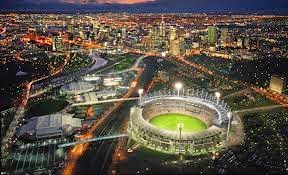
Melbourne is sport crazy and its venues legendary. Join the fun at the iconic Melbourne Cricket Ground for the Australian Football League in winter or international cricket in the summer. Go trackside at Flemington for the excitement of the Spring Racing Carnival and Melbourne Cup. Be exhilarated by the Formula 1® Australian Grand Prix and see international soccer stars at Hisense Arena.

Shop Melbourne’s Designer Boutiques and Cool Local Labels

Discover edgy and high-end fashion in Melbourne’s retail scene. Shop Australian designers like Alistair Trung on Little Collins Street and Alpha 60 in Flinders Lane. Find Lupa in Fitzroy before browsing Brunswick Street and Gertrude Street. Go vintage shopping on Chapel Street and get statement pieces on High Street, Armadale. Look for international brands at Emporium.

Explore Melbourne’s Laneways and Architecture

Melbourne’s historic urban environment is full of life. Spend hours exploring the city’s beautiful arcades, one-off boutiques, eclectic laneways and graffiti art. Visit the Melbourne Museum and the World Heritage-listed Royal Exhibition Building. Admire Victorian landmarks such as St Patrick’s Cathedral, St Paul’s Cathedral and Flinders Street Station and discover Art Deco with the beautiful Manchester Unity Building.

Day Trip to Wineries, Forests and Surf Beaches

Taste world-class wines, artisan cheeses and handmade chocolate in the Yarra Valley, 90 minutes drive east. Cuddle a koala at Healesville Sanctuary or head into the nearby Dandenong Ranges for cute villages and towering forests. For more wines and surf beaches, drive 90 minutes south-east to the stunning Mornington Peninsula, or west to the Bellarine Peninsula.

Experience Life on the St Kilda Esplanade

Enjoy the tram ride to bohemian St Kilda and check out live pub music at the Espy. Go for great burgers at Barney Allen’s or the best pizza at Mr Wolf. Eat fish’n’chips on the beach, taste sublime coffee and cake on Acland Street and ride the rollercoaster at historic Luna Park.

Shop Local at Melbourne’s Amazing Markets

Get among the hustle and bustle of the Queen Victoria Markets in the heart of the city, and pick up some fresh produce or fashion. Take the tram to the South Melbourne Market and enjoy dim sims under its historic awnings. For bric-a-brac and vintage bargains, catch an early train to the Sunday Camberwell Market, 10 kilometres east of the CBD.

Get Outdoors in Melbourne’s Parks and Gardens

Run, cycle, walk or just relax in the stunning green spaces of Melbourne. Jog the tan track around the Royal Botanic Gardens and Kings Domain along the banks of the Yarra River, seeing Government House along the way. In Royal Park, find Melbourne Zoo. Picnic in Fitzroy Gardens in the CBD after visiting Captain Cook’s Cottage.